
QTX-9 Workshop on Quantum Technologies on Small Satellites
- 19-20th Oct 2026
- Park Avenue Rochester
Welcome to the website for QTX-9! The ninth edition of the Workshop on Quantum Technologies on Small Satellites will take place on October 19th and 20th 2026 in Singapore.
The workshop is co-hosted by the QTX research forum led by Alexander Ling of NUS and Markus Krutzik of Humboldt-Universität zu Berlin and Ferdinand-Braun-Institut, Leibniz-institut für Höchstfrequenztechnik. The forum met previously in Germany (2018, 2024), UK (2019), United Arab Emirates (2023) and online (2020, 2021).
The two-day event will focus on (small) satellite technologies and quantum experiments in space – including both space-based and ground architectures, from component through to mission design.
QTX has been and continues to be a limited-attendance, few-day workshop, in which participants are given the opportunity to share ideas, directions, and concerns to advance the state of the field. Talks are by invitation only and catered to broadly cover the ongoing and planned missions, components for space missions, key enabling technologies and industrial space quantum technologies.
This year we will meet in Park Avenue Rochester, Singapore.

Programme
-
Monday 19 October
-
Tuesday 20 October
9.00 Registration | Please make your own way to the Centre for Quantum Technologies (CQT) at the National University of Singapore (location). Registration will be at CQT Block S15, level 5 pantry area. We will proceed from there to lab tours.
12.00 Lunch | Join us back at the event venue
14.00 Opening remarks | Alexander Ling and Markus Krutzik
Session 1 - Quantum Missions & In-Orbit Experience
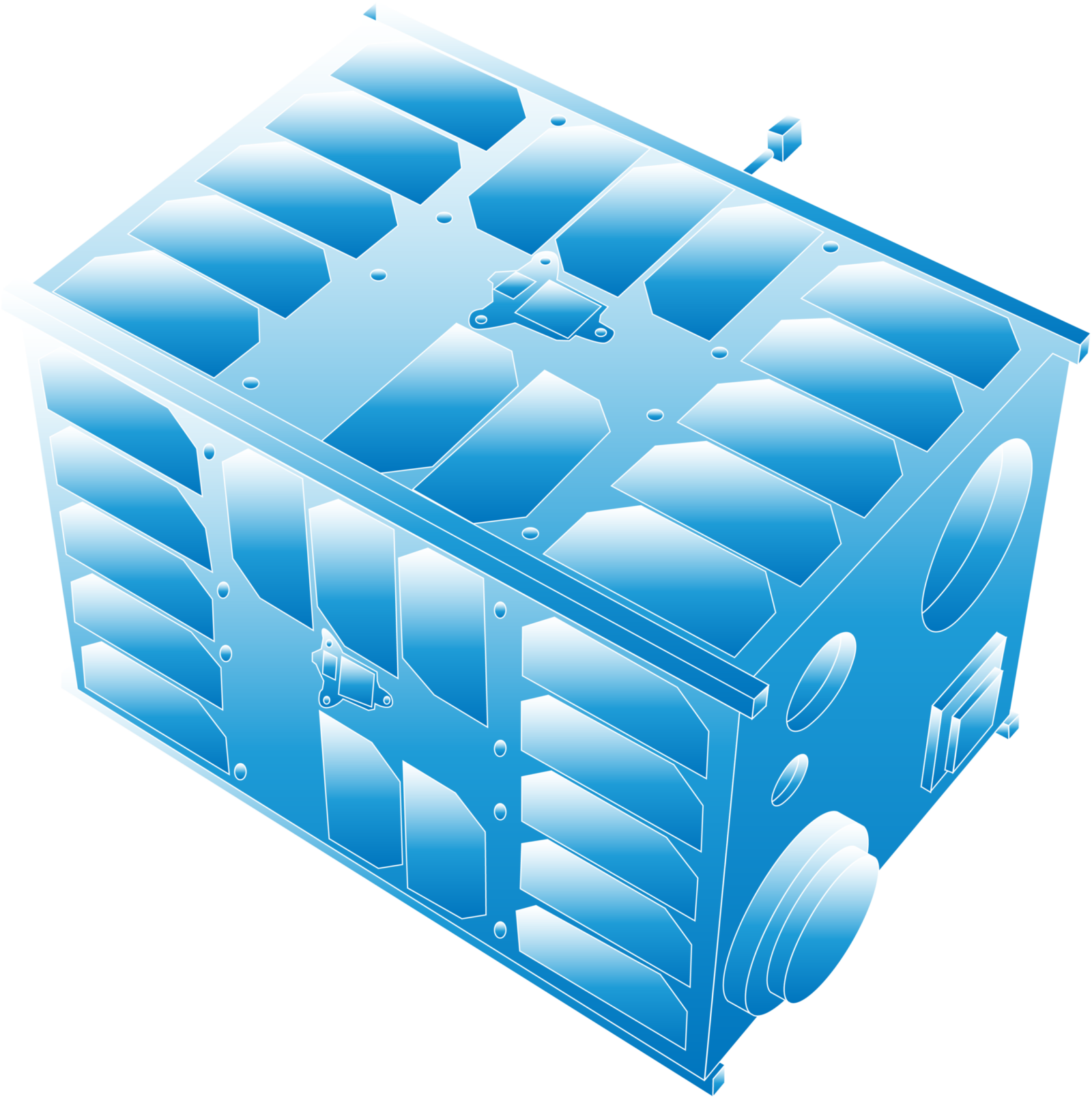
The SpeQtre mission is a 12U CubeSat developed jointly by SpeQtral and UKRI RAL Space to support the advancement of space-based quantum communications and to gain practical experience operating quantum technologies in orbit. The mission is based on a miniaturised entangled photon pair source and is intended as a pathfinder for future space–ground quantum communication systems.
The project combines complementary expertise, with RAL Space providing the satellite platform and optical terminal, and SpeQtral contributing the quantum payload hardware. SpeQtre builds on earlier academic and technology demonstration activities and forms part of a longer-term progression towards more operationally relevant space quantum communication capabilities. In this context, the mission contributes to the objectives of the European Space Agency’s INT UQKD programme, helping to inform future system concepts and programme activities.
This presentation will provide a high level overview of the SpeQtre mission, its development background, and its current status. An update on the current status of mission operations will be presented, focusing on key milestones reached to date and the transition from launch and commissioning into ongoing mission activities. The emphasis will be on overall mission status and operational experience rather than detailed technical performance or experimental results.
Results from the Space Entanglement and Annealing QUantum Experiment, a University of Illinois-led space mission. We present long-term data on SEAQUE’s waveguide-based entangled photon source, achieving consistently high state fidelities over the mission duration. We also present data on single-photon detector radiation damage, along with in-situ dark count reduction via both laser and thermal annealing methods. SEAQUE is expected to return in May 2027.
15.50 Coffee break
Session 2 — Optical Ground Segment
Specialised optical ground station infrastructure will be required for the comparison of optical atomic clock timescales between ground and space. The optical ground station is required for precise pointing, acquisition, and tracking of the spacecraft carrying the clock, it needs have a sufficiently large collecting area to receive the spacecraft’s timing incoming laser signal on phase-sensitive detectors, efficiently couple this laser light into single mode fibre, transmit a coherent laser timing signal of sufficient optical power at an independently steerable point-ahead angle to hit the spacecraft, be able to remotely access or support a locally hosted ground-based timescale, and ideally be located in an optimal site in terms of environmental and operational conditions.
The Astrophotonics group at University of Western Australia (UWA) has established the TeraNet optical ground station network in Australia (www.teranet.space). This network includes the TeraNet-2 (TN-2) optical ground station located at Geoscience Australia’s Yarragadee Geodetic Observatory (YGO). TN-2 is specifically optimised to support high-precision timing between ground and space.
The TN-2 ground station comprises a Planewave Instruments, 70-cm aperture, RC700 telescope, with gold-coated optics that are well-suited for 1550nm operations. The telescope is housed within a 4.6m two-storey Gambato observatory dome, which is connected to an adjacent building that includes a temperature-controlled laser laboratory and local control room. A HartSCI ClearStar LC adaptive optics system is coupled to one of the telescope’s Nasmyth ports to enable efficient single mode fibre coupling. The adaptive optics system includes a separate optical fibre-fed 15-cm transmit telescope with integrated point-ahead capability that includes first-order uplink pointing calibration and correction capability.
The other Nasmyth port supports a state-of-the-art, dual-wavelength, kHz-class pulsed satellite laser ranging system, but it also has the provision for a free-space Coudé path to the adjacent temperature-controlled laser laboratory. The laboratory has an optical table and equipment rack to support future installations of specialised state-of-the-art optical atomic clocks. The laser laboratory includes coaxial cable links to the YGO’s local timescale, comprising a suite of geodetic-grade GNSS equipment and a hydrogen-maser atomic clock, and the site is connected via a multi-path AARNet dark fibre network to the UWA campus, ESA’s New Norcia Deep Space Tracking Facility, and the Australian Square Kilometre Array telescope site, which operates its own UTC(k).
YGO is one of the world’s premier locations for ground-space links. It is a fundamental geodetic observatory that includes the world’s most productive satellite laser ranging facility, NASA’s MOBLAS-5, a 12-m geodetic VLBI antenna, DORIS transmitter, and geodetic-grade GNSS equipment. The site has a favourable climate with very low annual cloud cover, and especially over the six summer months, and it is centred on a nationally legislated no-fly zone. It has surprisingly decent astronomical seeing, typically around 1–3 arcseconds. The site is connected to high-speed redundant AARNet internet, grid power, has security controls, and is staffed by Geoscience Australia personnel.
In 2027, the Astrophotonics group plans to conduct the first coherent laser link demonstration via reflection off the Ajisai geodetic satellite, utilising the group’s velociraptor high-Doppler phase-tracking technology [1, 2] referenced to a commercial-grade portable optical atomic clock. These demonstrations will be used to validate the specific suitability of TN-2 to support future state-of-the-art optical atomic clock fundamental physics space missions, with TN-2 forming the blueprint for the required deployment of similar specialised optical ground station infrastructure around the world.
Satellite quantum networks offer a path towards global-scale quantum communication, owing to the quadratic loss scaling of space–Earth optical links, in contrast to the exponential attenuation of optical fibre. To support this, a network of high-precision optical ground stations (OGSs) is required to sustain the line-of-sight optical link between space and ground segments. To date, most OGSs are situated in remote locations away from population centres to mitigate the effect of anthropogenic light pollution on QBER. However, this approach limits access to the infrastructure and connectivity necessary for practical OGS deployment, creating a fundamental trade-off between low-background operation and urban accessibility.
The Singapore Optical Ground Station (SOGS) was commissioned in 2024 as a quantum-capable facility located on a metropolitan site. We present experimental characterisations of SOGS against link-loss models to validate its feasibility for sustaining a space–Earth quantum link. This includes passive tracking of low-Earth-orbit satellites with tracking precision ranging from tracking precision ranging from 1.04” to 3.64”, approaching Singapore’s atmospheric seeing limit of approximately 2”-3”. Sky background measurements yielded noise levels of 200–1200 cps, varying primarily with lunar phase and angular separation from the Moon, and remaining within operational bounds even under high lunar illumination. SOGS’s tracking precision, background levels, and detector performance compare favourably against a reference link budget shown to yield secure key rates of 19.2 kbit per pass.
In tandem with its quantum networking capabilities, SOGS’s equatorial location provides frequent access to a broad range of orbital inclinations, making it an attractive testbed for optical space situational awareness, including passive satellite monitoring and orbit refinement. To date, the SOGS has successfully optically tracked various space assets including equatorial and MEO CubeSats. Taken together, these capabilities position SOGS as an experimental hub for both quantum networking and the growing space ecosystem in Singapore. This represents a key step towards the deployment of satellite quantum links in the region.
17.40 Workshop dinner
Session 2 — Optical Ground Segment contd
Quantum Key Distribution (QKD) is emerging as a key technology for securing communications against future quantum computing threats. While fiber-based QKD networks have demonstrated significant progress, free-space quantum communications are essential for extending quantum-secure links beyond terrestrial limitations and enabling future satellite-based quantum networks.
The United Arab Emirates has made significant investments in quantum technologies, with the Technology Innovation Institute (TII) leading the development of free-space quantum communication capabilities. Central to these efforts is the Abu Dhabi Quantum Optical Ground Station (ADQOGS), a unique research infrastructure designed to support free-space optical communications, satellite quantum communications, and advanced optical tracking experiments.
This presentation provides an update on the development and operational status of ADQOGS, highlighting recent milestones in system integration, optical tracking performance, and quantum communication readiness. The facility combines high-precision telescope systems, tracking and pointing technologies, and quantum communication payloads to create a versatile platform for testing quantum links under realistic environmental conditions.
Recent free-space QKD testing activities have focused on validating key system components, characterizing channel performance, and evaluating the impact of atmospheric effects on quantum signal transmission. Experimental campaigns have provided valuable insights into link stability, background noise mitigation, synchronization methods, and system optimization for future long-distance quantum communication scenarios.
The presentation will summarize the main technical achievements, lessons learned, and ongoing developments toward establishing robust free-space QKD capabilities in the UAE. These efforts contribute to the broader objective of enabling secure terrestrial and space-based quantum communication networks and positioning the UAE as a regional hub for quantum-secure communications research and innovation.
As satellite quantum communications networks mature, mobile optical ground stations will be required to provide practical and flexible network connections for vehicles, temporary installations, and other mobile infrastructure. Such capability is particularly important for Defence and for applications involving quantum-assured position, navigation and timing. We report on the development of TeraNet-3, a 0.4m optical telescope mounted on a four-wheel drive vehicle that has been designed for optical and quantum communications with satellites. TeraNet-3 recently completed an upgrade to support entangled uplinks to upcoming QKD satellite missions with the intention of demonstrating quantum key distribution via satellite and validating the technologies required to support quantum-assured position, navigation and timing systems over the next two years. TeraNet-3 is capable of rapid deployment – being able to acquire a pointing model and begin tracking satellites within 10 minutes of the vehicle stopping, even in broad daylight. Future mobile ground stations based on TeraNet-3, or using technologies and procedures developed and demonstrated on TeraNet-3, will be critical to future satellite quantum networks.
10.20 Coffee break
Session 3 - New Frontiers for Quantum Technologies in Space
Quantum computing has seen remarkable progress in recent years, with major breakthroughs demonstrating meaningful quantum advantages even on small-scale hardware. Among the various quantum computing platforms, photonics has emerged as a particularly promising architecture for specialized applications, ranging from quantum random walks and sampling algorithms to quantum machine learning.
Beyond its computational capabilities, photonic quantum technology offers unique hardware advantages that make it exceptionally well suited for space deployment. This potential was demonstrated by the launch of the world’s first photonic quantum processor prototype into space in June 2025. In this workshop, I will present the technological developments behind this mission, the challenges of operating quantum processors in space, and the opportunities this opens for future space-based quantum computing.
Quantum mechanics is based on a series of postulates. Examples include that the wavefunction is a complex number or the probability interpretation of the the absolute square of the wavefunction (known as the Born rule). It has been impossible to prove or derive these postulates, at least not without making other assumptions about the mathematical structure of the measurement process. It is, however, possible to test and challenge those postulates experimentally and check, if nature and quantum mechanics is indeed described by these postulates within the measurement accuracy. In terrestrial experiments, so far no significant deviation has been observed. In this talk, we present results from the QUICK3 space mission, where we have implemented a multi-path interferometer together with a quantum light source and single photon detectors onboard a small satellite and have tested the Born rule and hyper-complex quantum mechanics in a microgravity environment. Our experiments reveal no gravitational coupling, therefore limiting the parameter space that any quantum gravity theory can take.
12.10 Group photo & Lunch
Abstract to come
Session 4 - Satellite Platforms & Mission Engineering
A quantum network spanning intercontinental distances will require satellite payloads that can swap entanglement. We report on results from the Q4S mission, which demonstrates entanglement swapping on a deployable payload. Quantum networks that span intercontinental distances will require hardware such as entangled pair sources and quantum repeaters that can be deployed to space. Entangled pair sources have been demonstrated in space, but challenges remain for space-based quantum repeaters. The basic functionality of quantum repeater is to relay quantum information via entanglement swapping. In entanglement swapping, two independent photons, each belonging to a distinct entangled photon pair, become entangled after their twins undergo a Bell-state measurement (BSM). To date, demonstrations of entanglement swapping have been performed only in laboratory settings, on large tabletop benches due to the size weight, and power (SWaP) of the lasers and detectors, and have required carefully controlled laboratory environments. To perform space-based entanglement swapping, a massive reduction in SWaP and increase in ruggedness is needed. The goal of the Q4S mission is to meet this demand and deploy a satellite payload that performs a self-contained entanglement swapping experiment in low-Earth orbit. The main challenge of the Q4S mission is to perform entanglement swapping at a sufficient rate and fidelity without an excessive power demand. As space-based entangled photon sources conventionally use a CW diode laser pump, the requirement for indistinguishability for swapping precludes this, due to the high degree of spectral correlation produced by such sources. Instead, we employ a compact mode-locked fiber laser that generates 100 fs pump pulses, thereby relaxing the filter-bandwidth requirements. Utilizing this moderate filter bandwidth and silicon APD’s for detection gives a sufficient swap rate to demonstrate entanglement swapping within a tractable integration time. The Q4S payload entangled photon source is a ppKTP (periodically-poled potassium titanyl phosphate) crystal, pumped at two distinct locations to generate two-pairs of polarization-entangled photons via type-II spontaneous parametric down conversion (SPDC). A successful BSM on two of the photons, one from each pair, swaps the entanglement and heralds the remaining two photons at sites A and B in a polarization Bell state of the form |Ψ⟩ = |𝐻⟩𝐴|𝑉⟩𝐵 +𝑒𝑖𝜙|𝑉⟩𝐴|𝐻⟩𝐵, where H and V denote horizontal and vertical polarization states, respectively, and 𝜙 is an arbitrary phase acquired from the optical components. The BSM configuration employs four detectors to resolve two out of the four orthogonal Bell states. Entanglement between the photons at A and B is certified via quantum state tomography. Each tomographic analyser consists of a pair of liquid crystal variable retarders (LCVRs), followed by a polarizing beam splitter with a free-space coupled silicon avalanche photodiode single-photon detector at each output. This configuration enables a projective measurement of an incoming photon onto any cardinal polarization basis. The space-bound payload has completed fabrication and payload-level environmental testing and is currently undergoing spacecraft-level integration and testing. The payload weighs < 20 kg with a ~12 L footprint and consumes < 45 W of power in nominal operating conditions. We obtain a swapped state fidelity of 0.67-0.71 ± 0.05, which surpasses the classical limit by nearly 10 standard deviations, with a rate of 24 events per hour. The Q4S mission is on track to be the first in-orbit demonstration of entanglement swapping, an important step towards a global space based quantum network. Notice: Boeing Patents and Patents Pending.
This presentation will review satellite quantum networking technologies being developed by Boeing and our partners.
16.00 Coffee break
For secure Quantum Key transfer from a satellite to ground optical links are to be used. This implies challenging requirements for precision pointing, in particular for small satellites. At the example of the CubeSats QUBE-I (launched 16.8.2024) and QUBE-II (launched 3.5.2026) related requirements and solutions will be presented. Preparatory ground tests, evaluation of in-orbit performance, and related fine-tuning approaches will be addressed in this presentation. In-orbit experiences related to contact initiation and tracking during fly-over will be reported.
Satellite-based quantum communication is one of the most reliable approaches for establishing secure communication over long distances. Using CubeSats enables cost effective and rapid development; however, it also introduces significant constraints by removing degrees of freedom that are available under laboratory conditions, such as active polarization alignment, active beam steering, and temperature stabilization. The complete system must therefore be passively robust, so that it operates reliably in orbit without on-board correction or ground intervention. The entangled photon source is the main subsystem of any entanglement-based protocol. We performed environmental testing, including vacuum exposure, adhesive bonding, thermal cycling, and vibration, to demonstrate the robustness of a beam displacer-based entangled photon source. The source retained a visibility of more than 95% after the tests, while brightness and fiber-coupling efficiency were reduced. This indicates that space readiness depends mainly on the number of alignment-critical interfaces. To address this, we design and implement a compact, collinear cross-crystal ppKTP source with birefringent compensation, built as a bonded assembly without adjustable elements after integration [1]. To guide the light towards the transmitters, we use two parallel polarization-maintaining fibers (PMFs) for the signal and idler channels, reducing polarization scrambling [2]. With this method, non-local compensation is achieved, requiring no or only limited active polarization control, depending on the protocol. Complementarily, this passive compensation can be used in satellite-relay architectures, in which passive optical relay increases the throughput by around two orders of magnitude [3]. Following this idea, we cross-coupled two PMFs at 90°. The results show that the polarization state is preserved, keeping the entanglement concurrence at about 0.90 while reducing the complexity of a relay-based network. Operational flexibility is achieved by implementing a 6-state–4-state reference-frame independent (RFI) protocol [4], where the splitting ratio can be varied to maximize the secure key yield. Finally, we demonstrated that that phase drift induced by the PM fibers does not affect protocol performance, even for the RFI case.
17.50 Closing remarks | Alexander Ling and Markus Krutzik
18.00 Workshop ends
Committees
Programme Committee
- Alexander Ling (Centre for Quantum Technologies, NUS, Singapore)
- Markus Krutzik (Humboldt-Universität zu Berlin and Ferdinand-Braun-Institut, Leibniz-institut für Höchstfrequenztechnik, Germany)
Local Organising Committee
- Tan Shao Tao (Centre for Quantum Technologies)
- Cassandra Lim (Centre for Quantum Technologies)
- Shaik Abdillah (Centre for Quantum Technologies)
Past QTX workshops
2019
United Kingdom
2020
online

2021
online
2022
Singapore
2023
Abu Dhabi,
United Arab Emirates
2024
Munich, Germany